Clinic RX Bukit Jalil
Kuala Lumpur, Malaysia
Mon–Fri, 10am–7pm | Sat, 9am–6pm
FACE CONDITION
Learn what causes dark eye circles, how pigmentation, visible blood vessels, thin skin and under-eye hollowing affect their appearance, and which doctor-led treatment options may be considered.

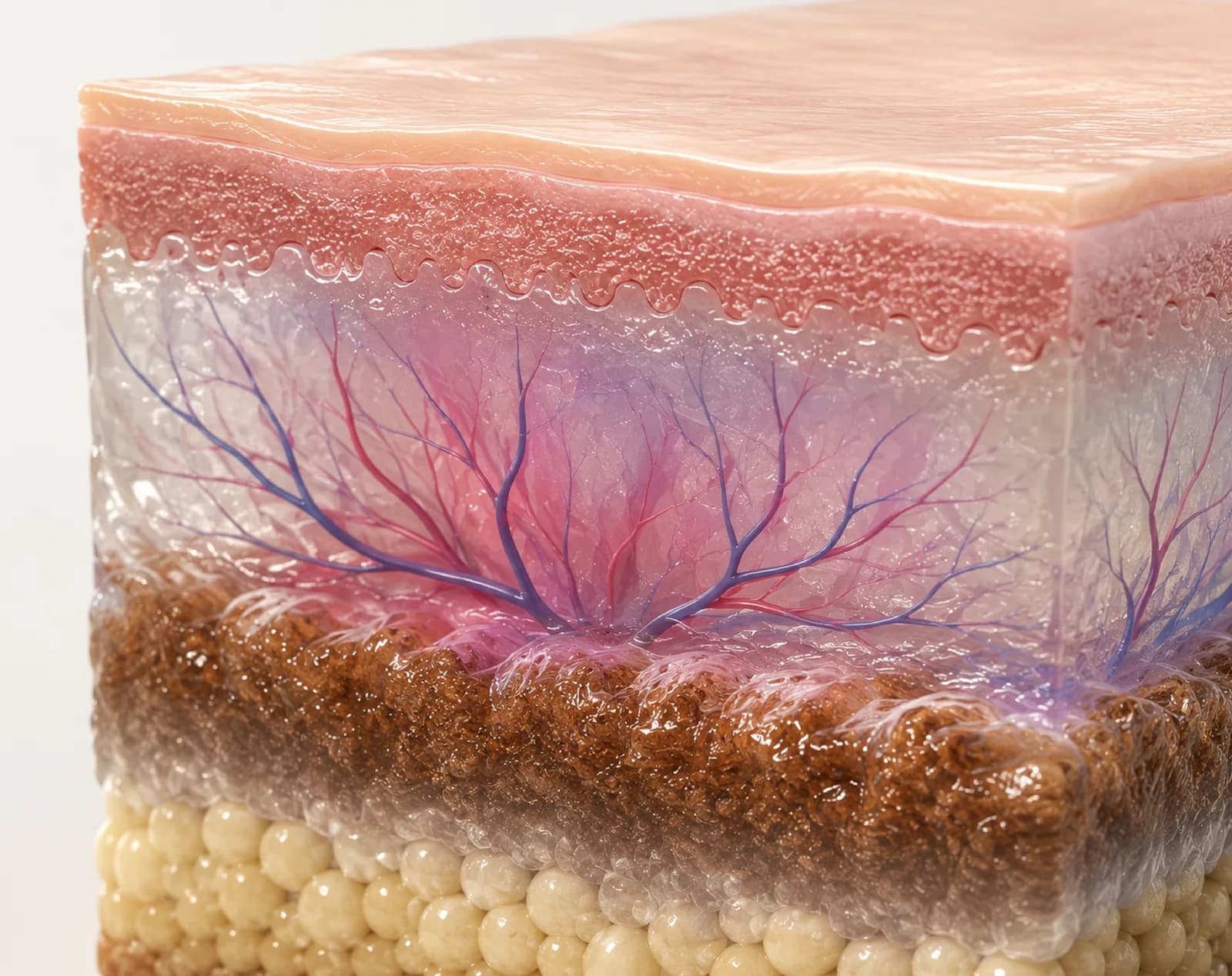
Dark eye circles appear when the thin under-eye skin reveals underlying blood vessels, pigmentation builds up, or volume loss creates a shadowed or hollow appearance.
Dark circles may persist even with adequate sleep because the underlying cause can be genetic, vascular, pigment-related, structural or a combination.
Early assessment helps determine the type of dark circle before treatment is selected.
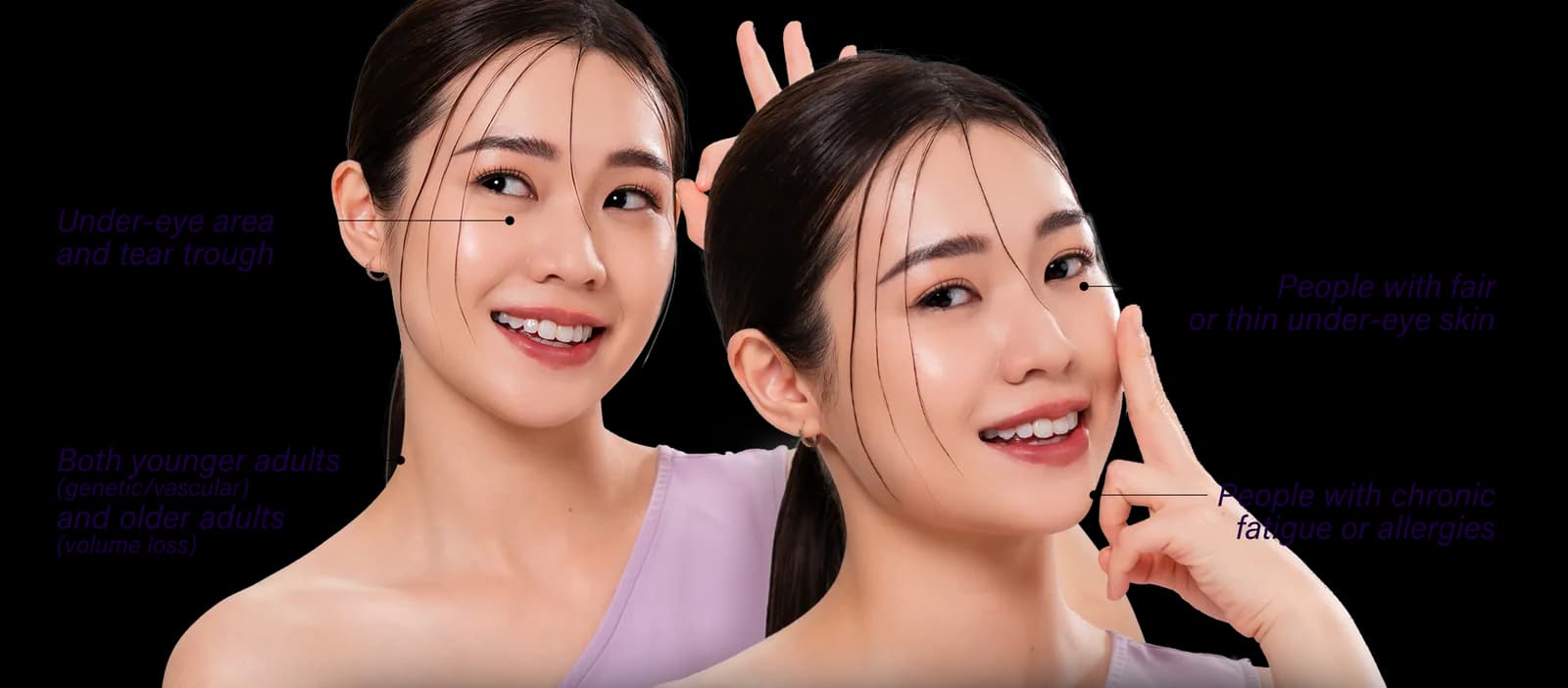
Dark eye circles are not all the same. Some are mainly pigment-related, some are caused by visible vessels or thin skin, and others are actually shadows from under-eye hollowing. Identifying the dominant cause is important before choosing treatment.
Dark eye circles can be caused by a combination of factors, including:
Because dark circles have multiple possible causes, treatment should first identify the dominant type rather than treating all dark circles the same way.
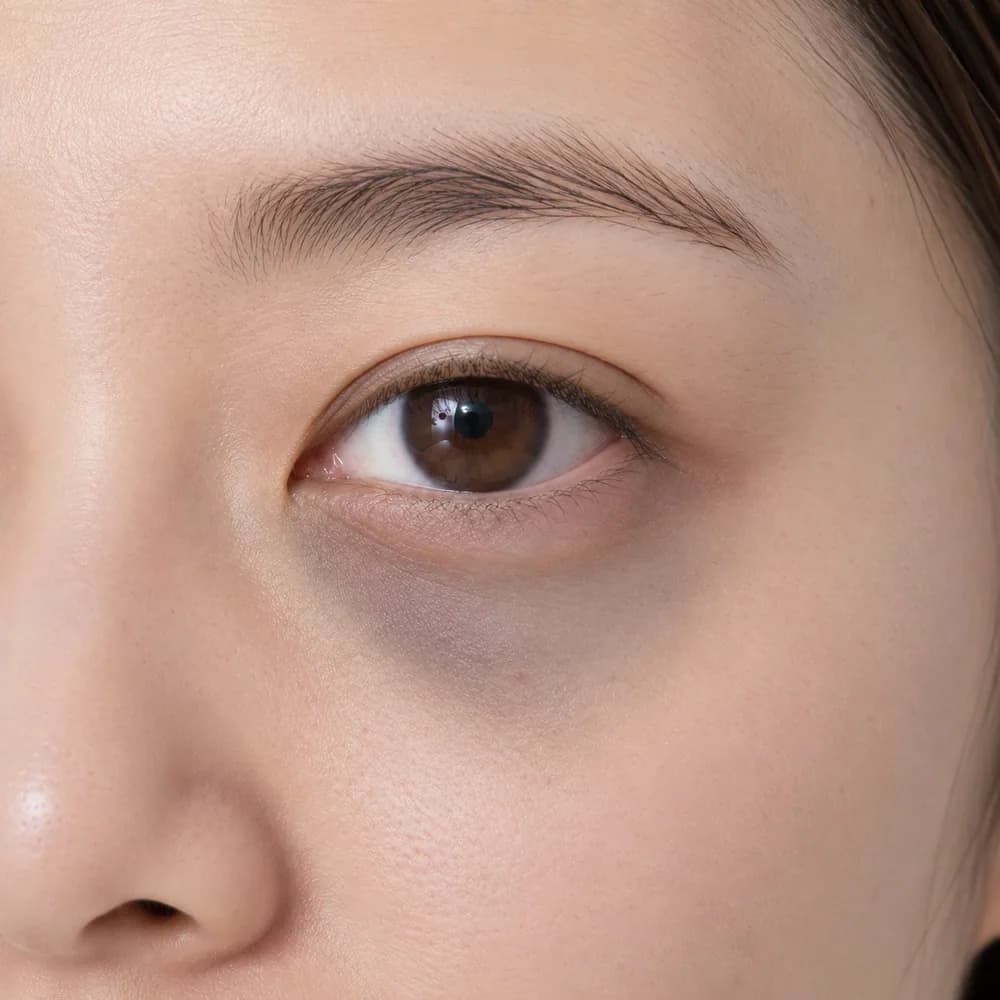
Brown or darker tone related to excess melanin
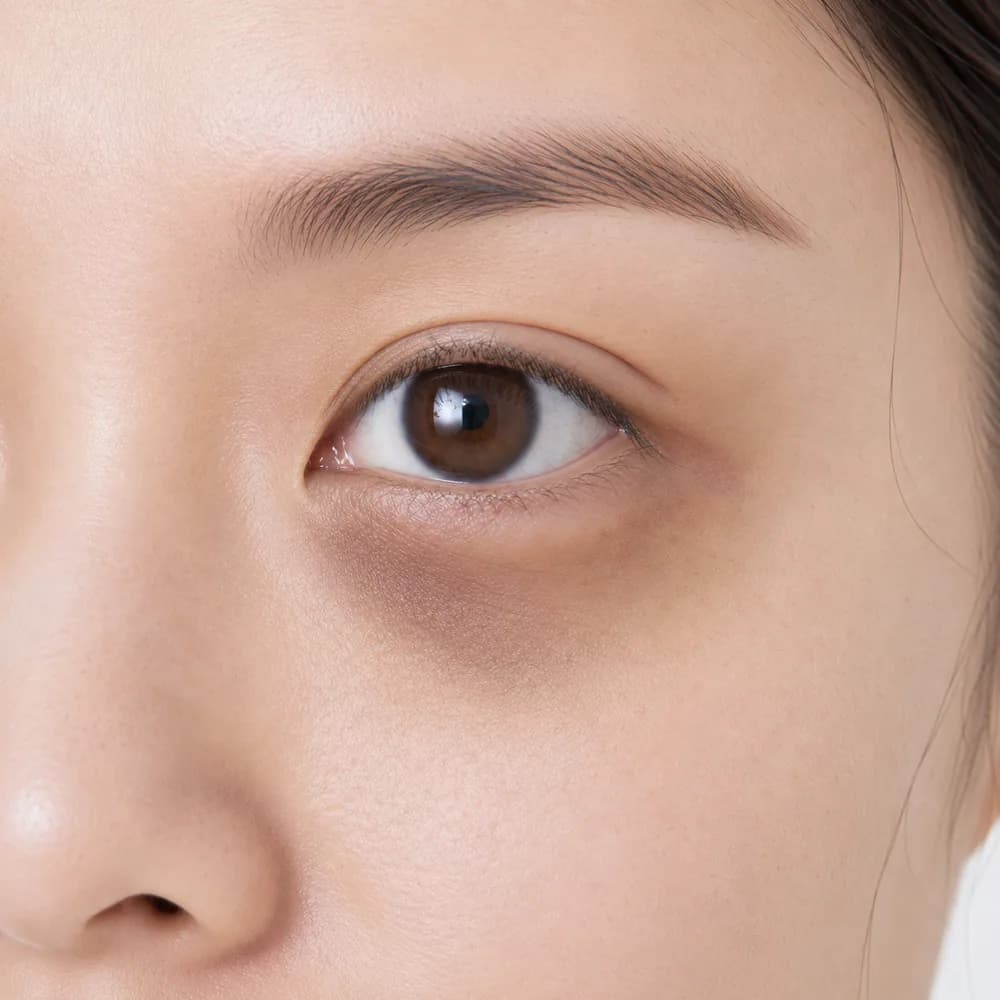
Bluish or purplish tone from visible underlying vessels
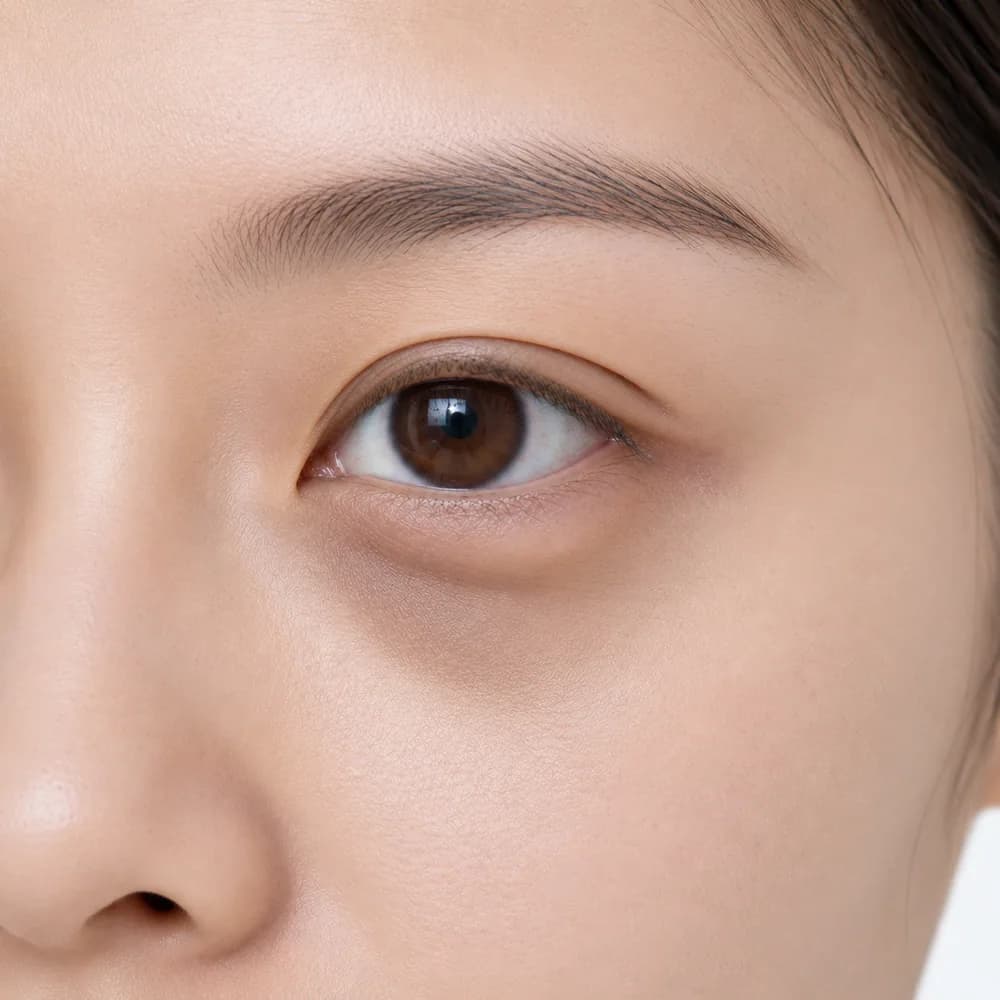
Shadowing caused by tear-trough hollowing or volume loss
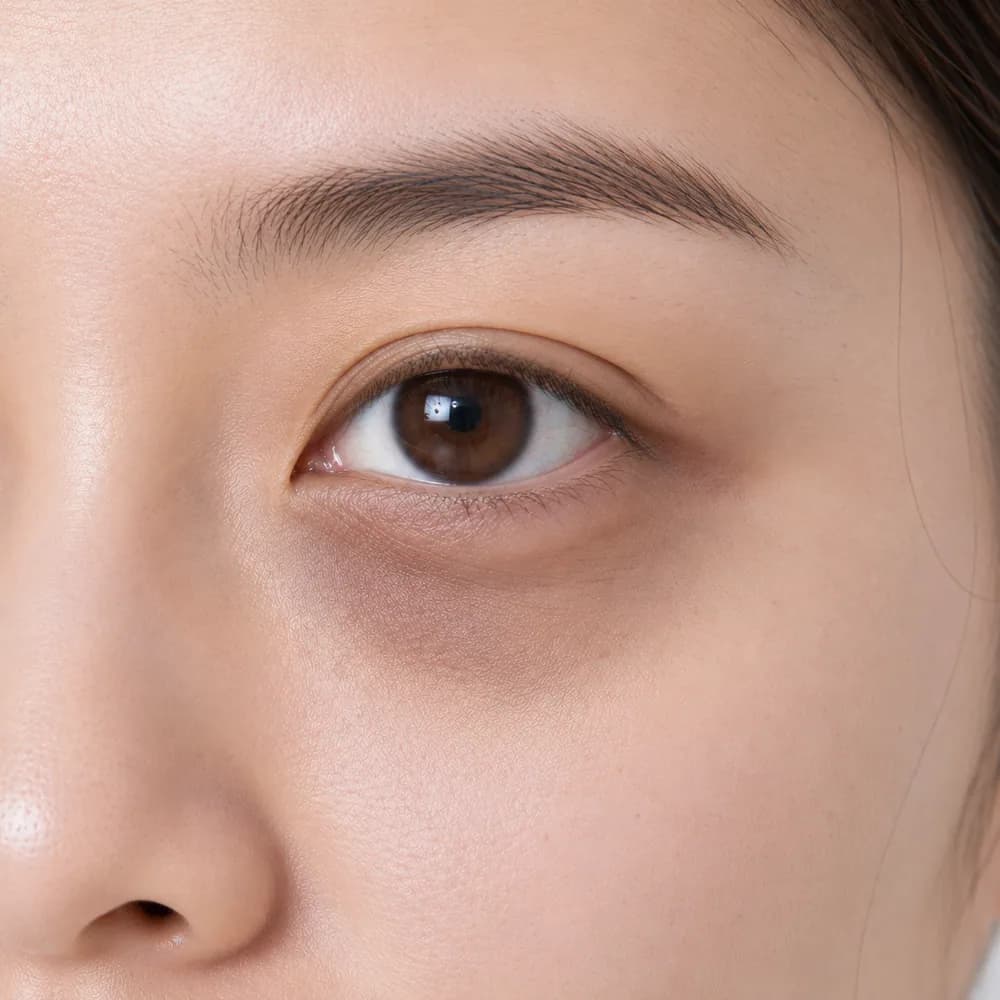
A combination of pigment, vascular and/or structural factors
A consultation and physical assessment is required to confirm suitability — this page is general education, not a diagnosis.
Suggested options are selected after doctor assessment and may be combined according to dark-circle type, skin condition, suitability, response and goals.
Book Consultation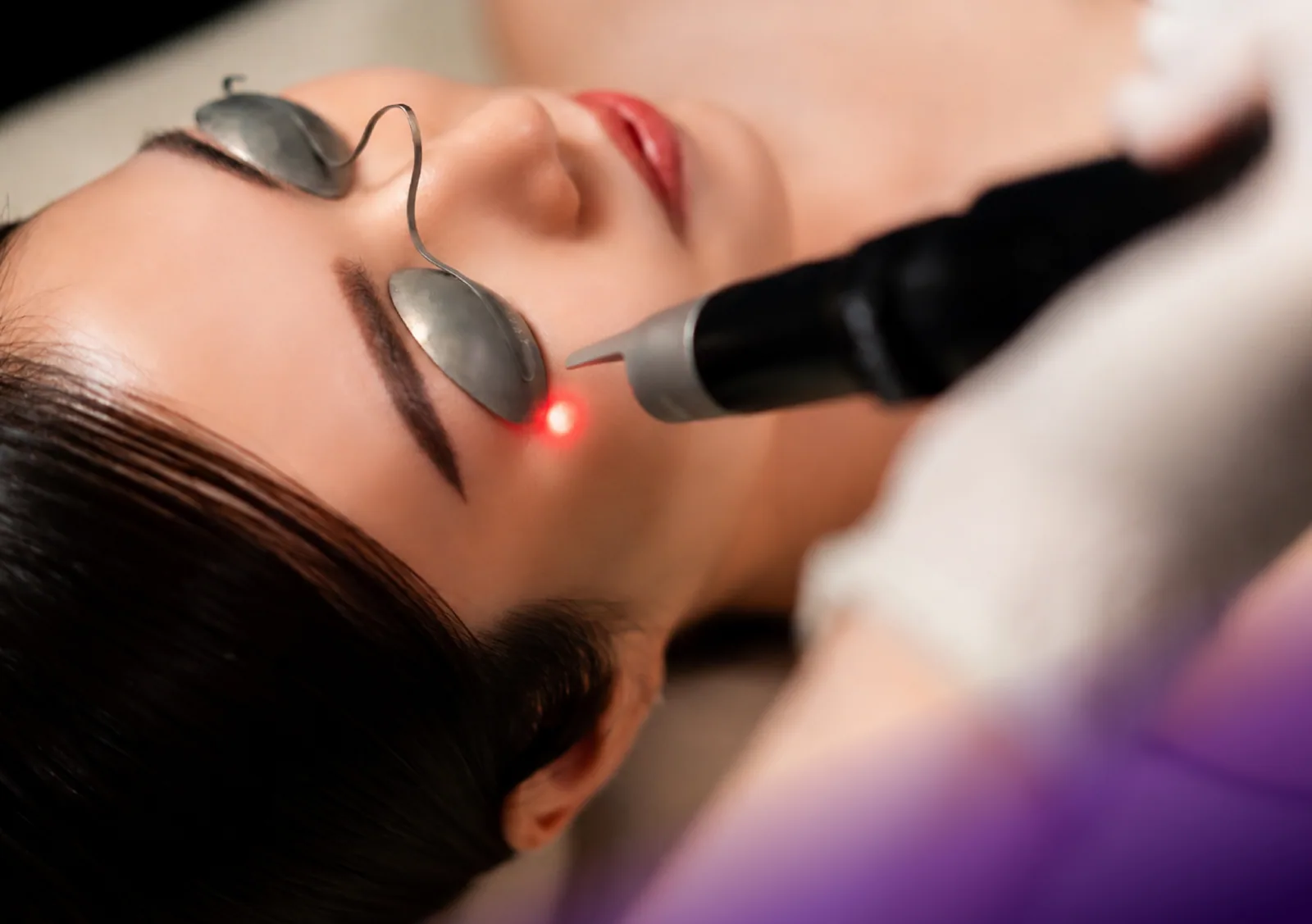 01
01Pigmentation-Related Dark Circles
Uses ultra-short laser pulses to target pigment and support skin renewal where pigmentation contributes to under-eye darkness.
 02
02Vascular Dark Circles
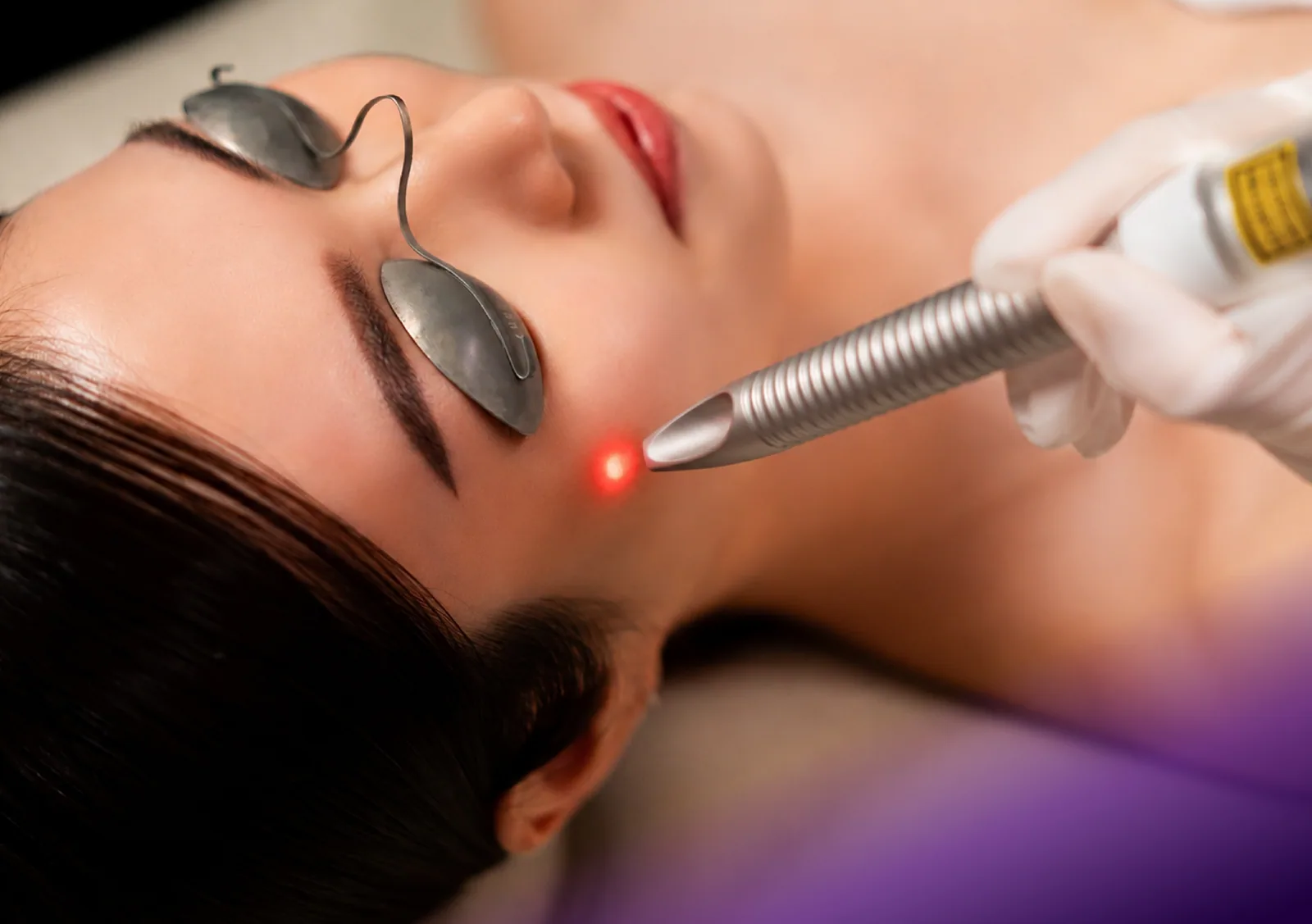
Targets visible blood vessels that may contribute to bluish or purplish under-eye discolouration.
 03
03Thin Under-Eye Skin & Skin Quality
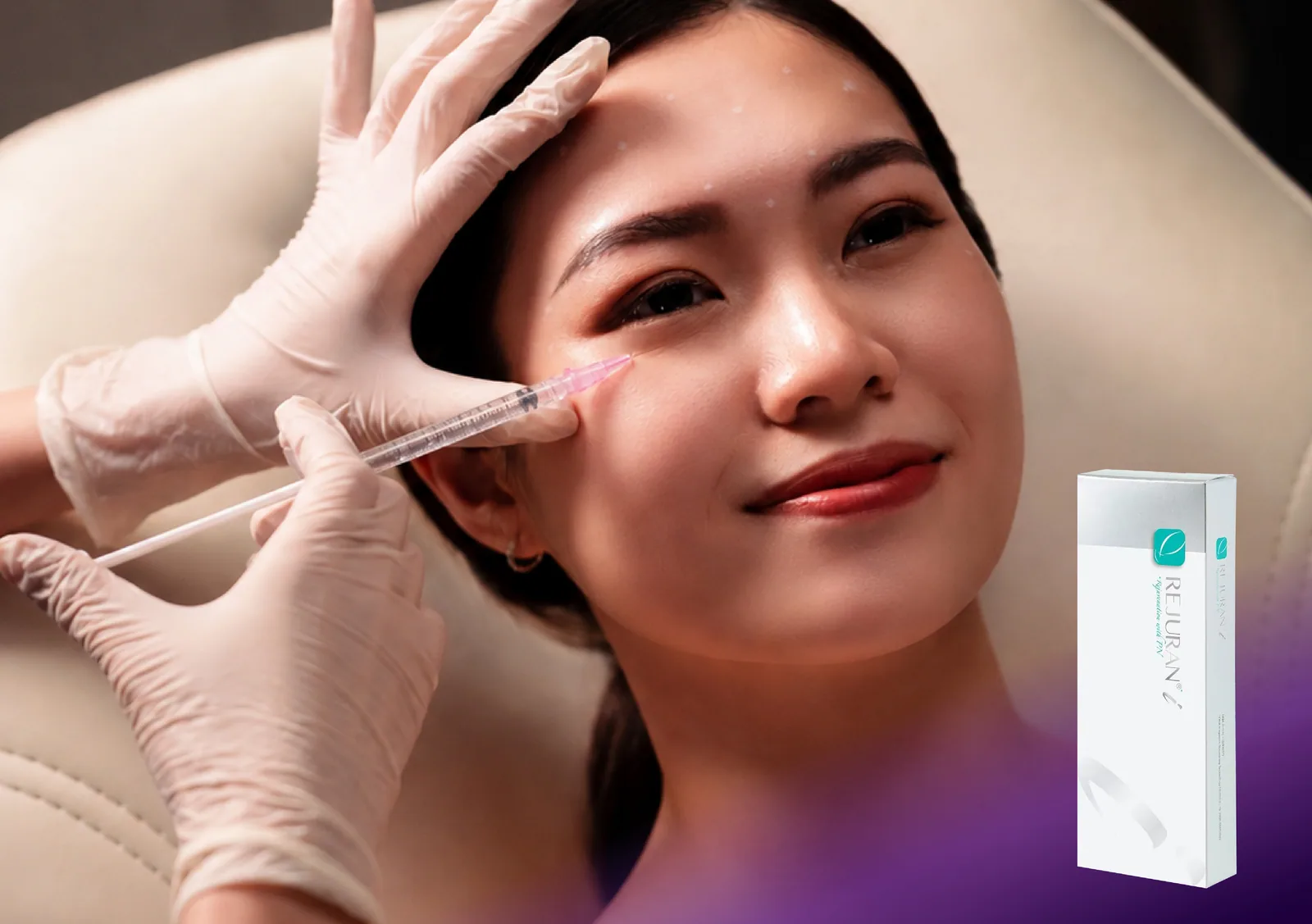
An under-eye-focused regenerative treatment used to support delicate skin quality, hydration and repair.
 04
04Under-Eye Skin Repair & Brightening
A regenerative injectable option used to support under-eye skin quality, repair and brightness.
 05
05Under-Eye Hydration & Skin Quality
Supports hydration and skin quality where thin or dehydrated under-eye skin contributes to a tired appearance.
 06
06Under-Eye Skin Rejuvenation
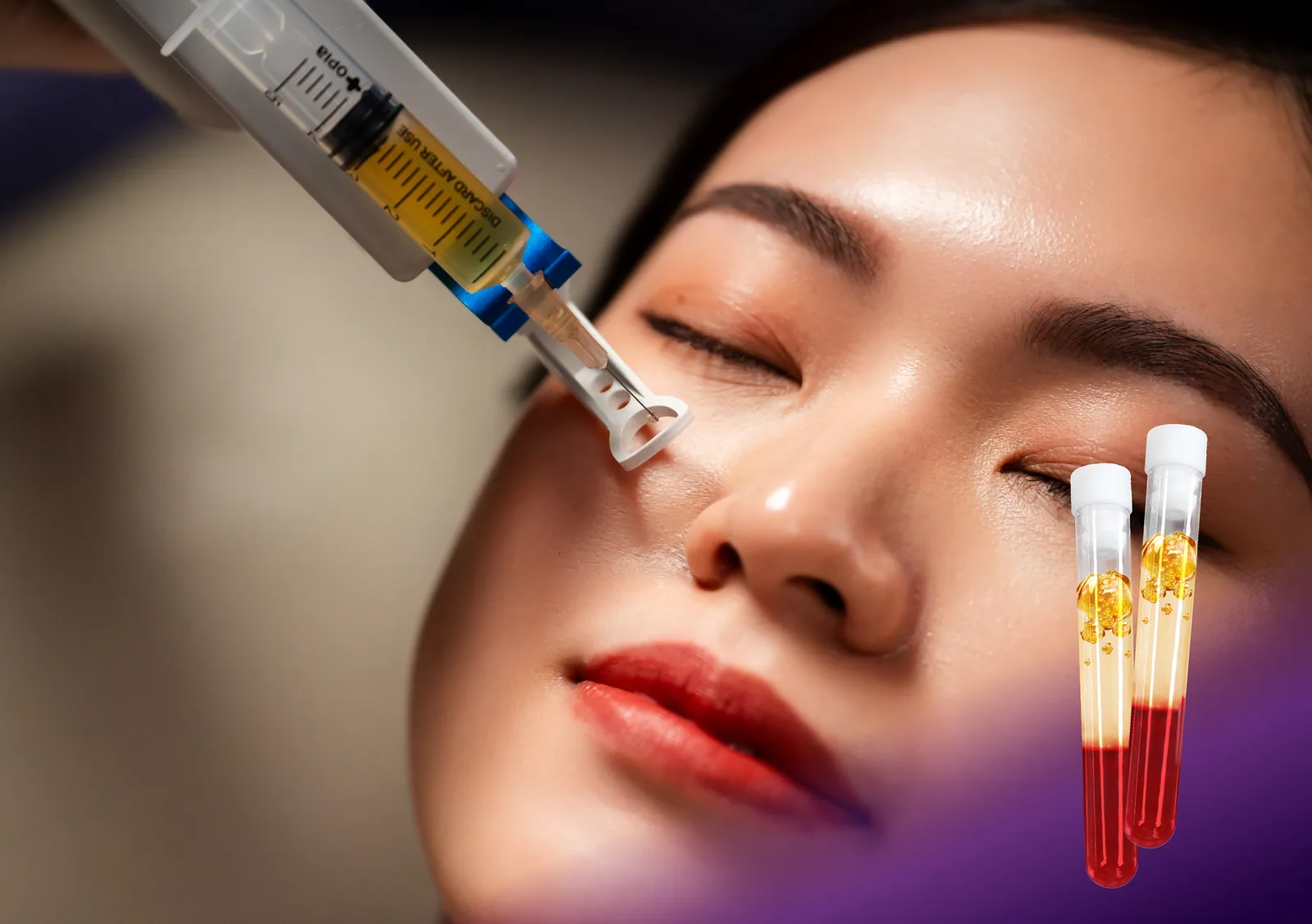
Uses the patient's own platelet-rich plasma to support rejuvenation of thin under-eye skin. Ask Clinic RX for treatment details →
 07
07Skin Repair & Brightening
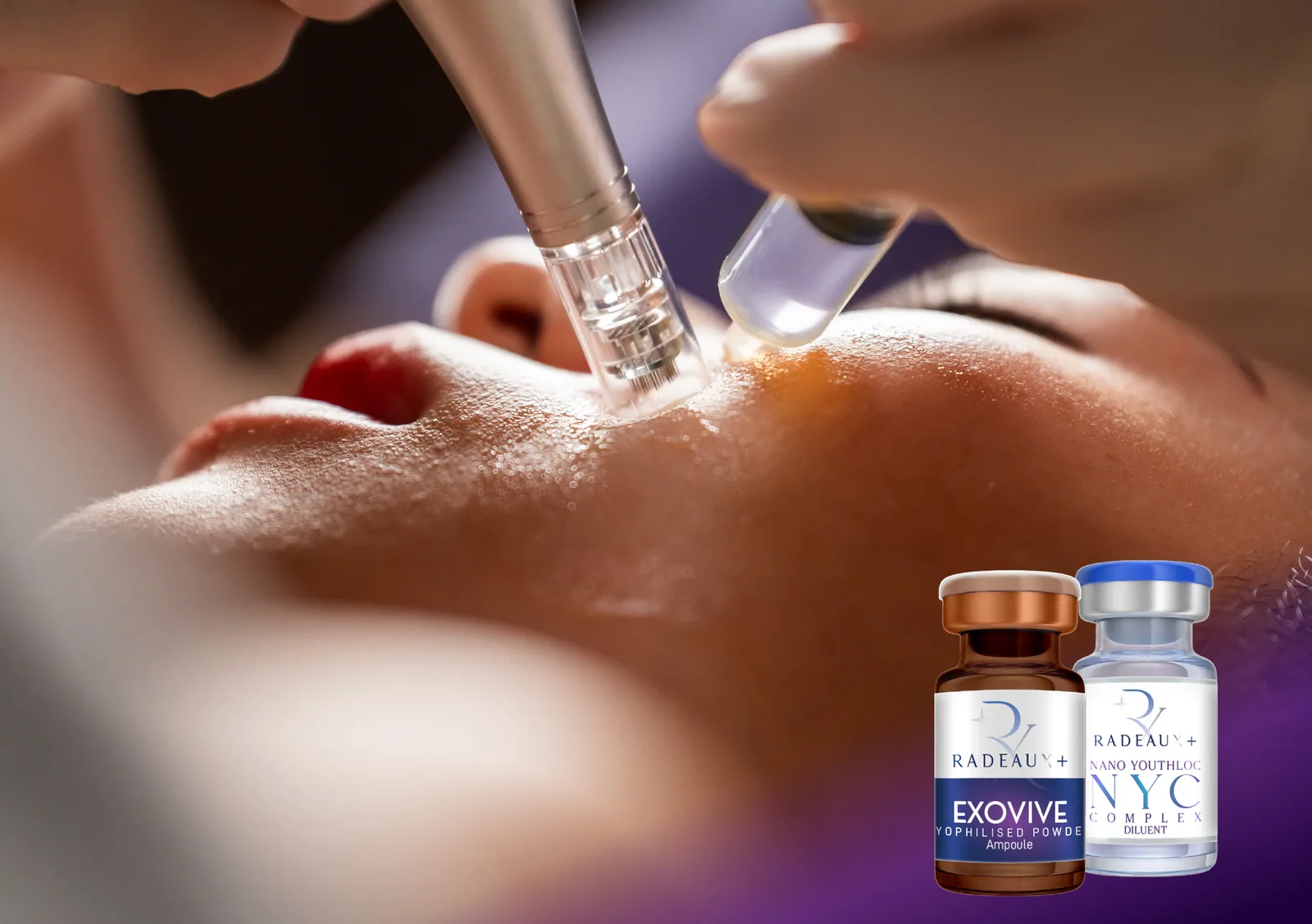
Supports skin repair and brightening where under-eye skin quality contributes to dark-circle appearance. Ask Clinic RX for treatment details →
A Clinic RX doctor can help identify your dark-circle type and compare treatment options based on your concern and goals.
The under-eye area has thin, delicate skin, and all aesthetic treatments carry some risk. Before treatment, your doctor will review your medical history and explain the risks specific to the recommended option.
This is general information, not medical advice. A full risk disclosure will be discussed during your in-person consultation before consent is obtained.
Before-and-after references show individual Clinic RX outcomes. Results vary according to starting condition and treatment plan.
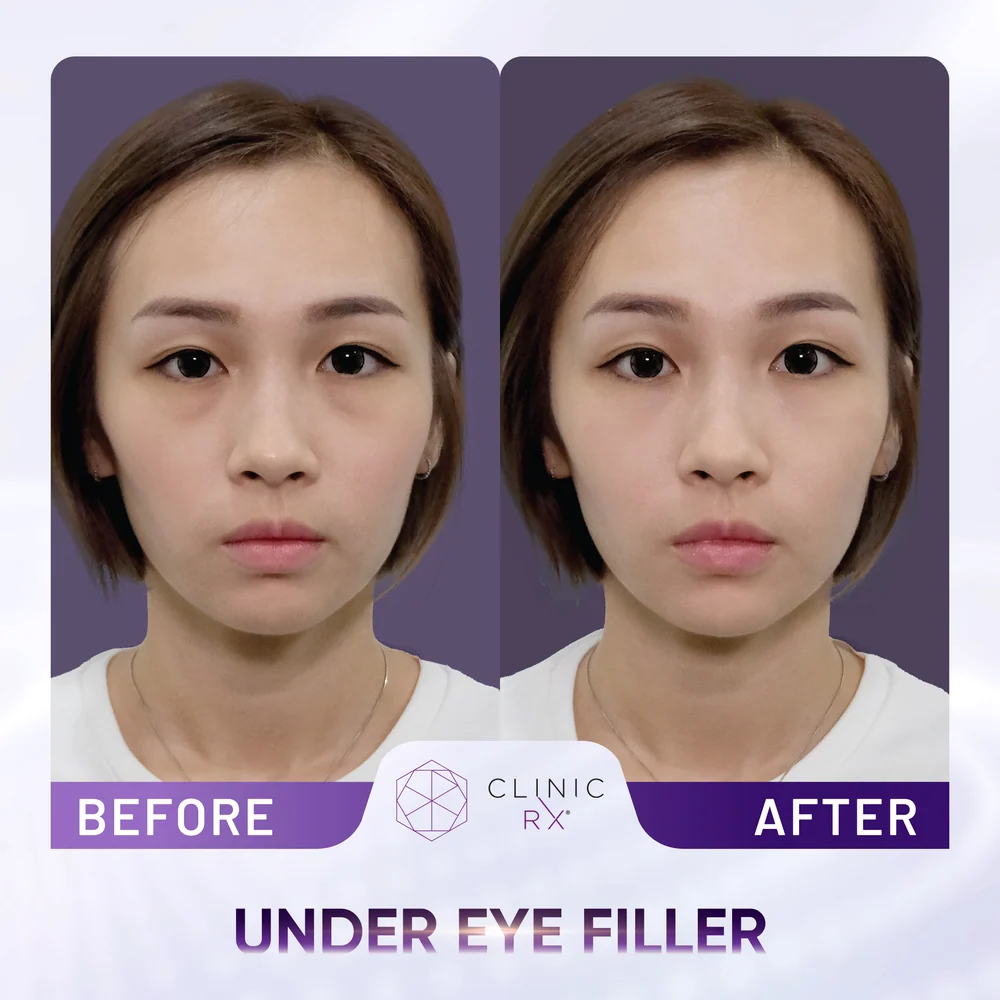
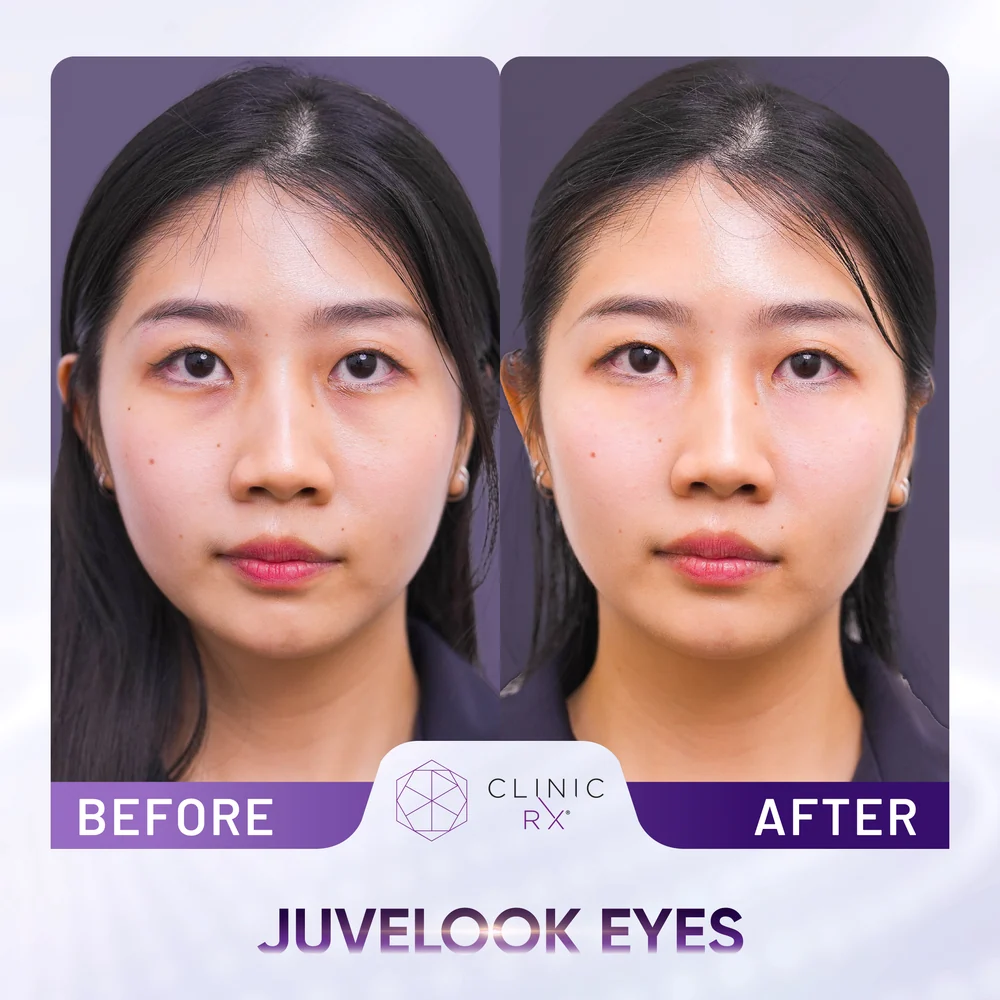
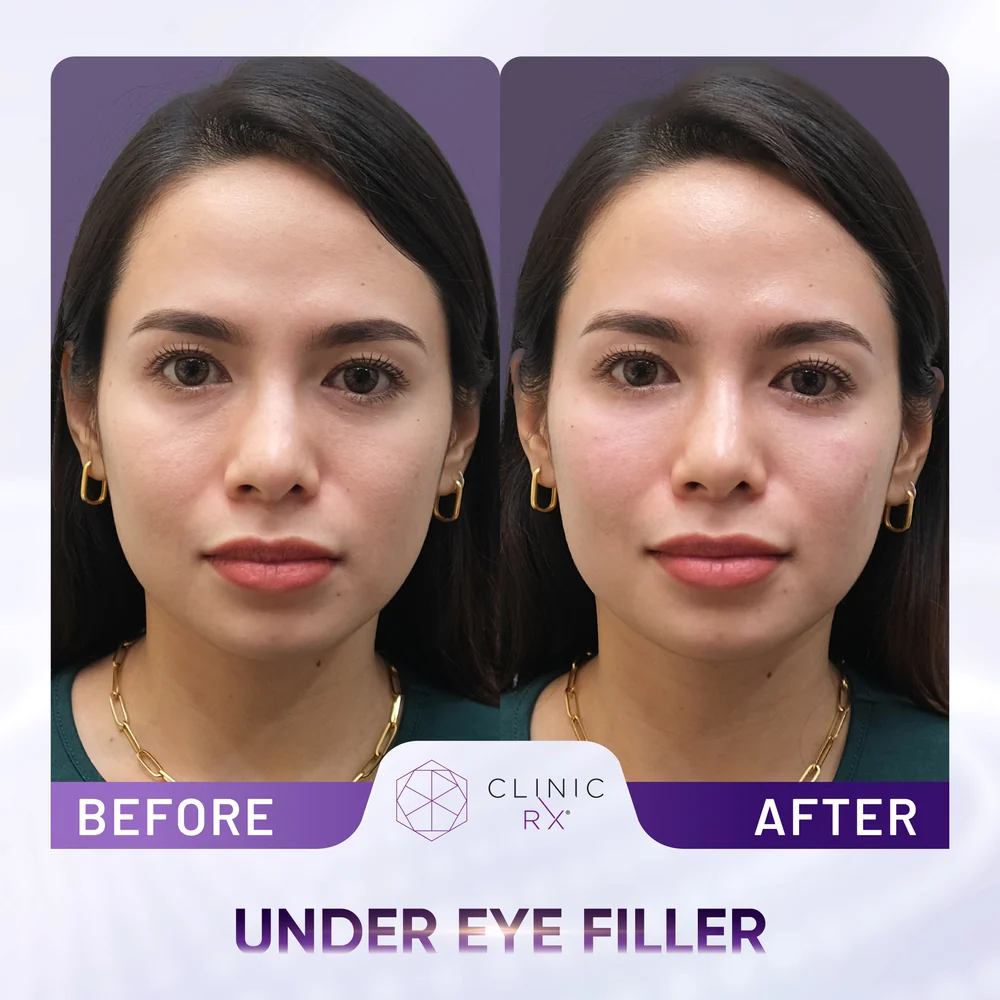
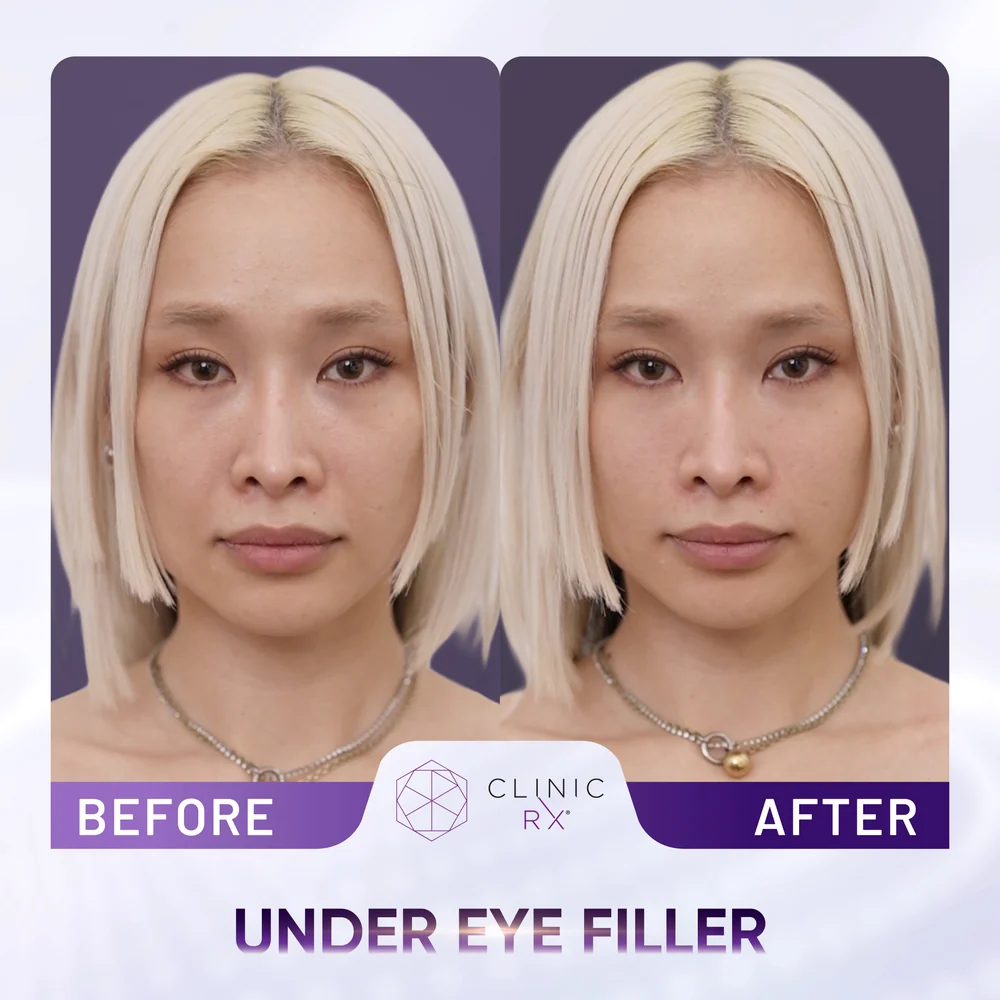
Depending on the underlying cause and treatment selected, suitable patients may experience:
Dark circle improvement is usually gradual and depends on correctly identifying and treating the underlying cause.
Genetics, thin skin, visible blood vessels, pigmentation, tear-trough hollowing, ageing, allergies, eye rubbing, fatigue or a combination can contribute.
Sleep is only one factor. Genetics, pigmentation, visible vessels, thin skin or structural hollowing may persist despite adequate sleep.
Brown tones may suggest pigmentation, bluish or purplish tones may have a vascular component, and hollowness can create shadowing. Mixed patterns are common.
Yes. Genetics can influence skin thickness, pigmentation, facial anatomy and under-eye hollowing.
Allergies and repeated eye rubbing can contribute to under-eye darkness or make existing circles more noticeable.
Not always. Genetic, structural and age-related factors may persist or recur, so treatment generally aims to improve rather than guarantee permanent removal.
There is no single best treatment. Pico Laser, Vascular Laser, Rejuran I, Plinest Fast, Deusaderm, PRP or Exosome Therapy may be considered depending on the underlying cause.
It may be considered when pigmentation contributes to under-eye darkness, but it does not address every vascular or structural cause.
A vascular component may be involved. A doctor can assess whether visible vessels are contributing and whether vascular-focused treatment is appropriate.
Skincare may support hydration, pigmentation care and sun protection, but cannot fully correct every structural or vascular cause.
It depends on the cause and treatment selected. Many pigment, vascular and regenerative treatments improve progressively.
If you are unsure whether your dark circles are mainly caused by pigmentation, visible blood vessels, thin skin or under-eye hollowing, a Clinic RX doctor can assess the area and discuss which treatment options may be suitable for your concern and goals.
Treatment suitability, expected results, risks, number of sessions and maintenance vary between individuals and will be discussed during consultation.